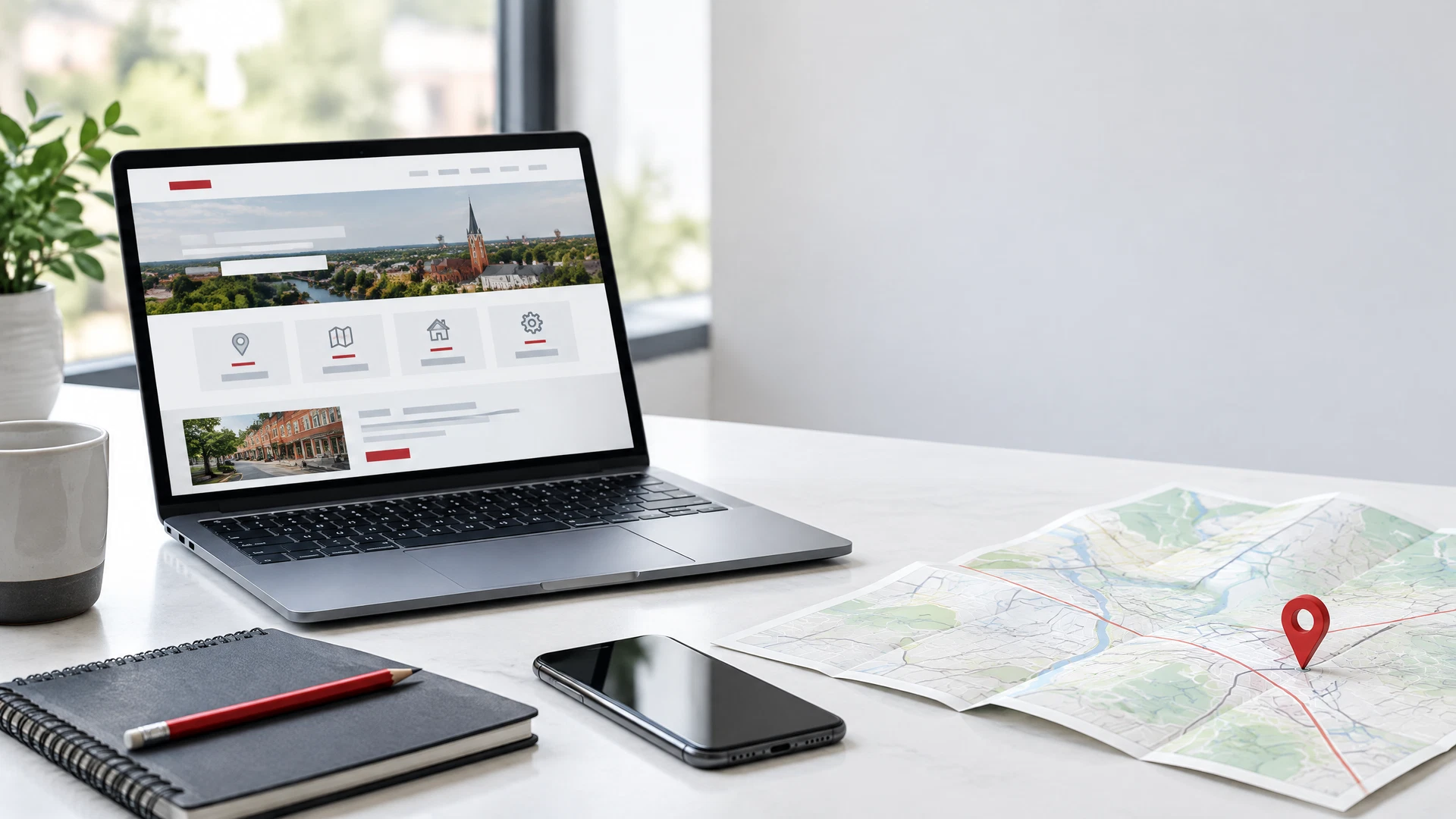
A service-area page should answer a practical question: can this business help someone in Stallings with the kind of work they need? It is not a substitute for a clear service page, and it should not be a general homepage with one city name added to the headline.
When a visitor reaches a Stallings page from Google Maps, search, a referral, or a link from another page, they are usually trying to reduce uncertainty. They need to understand the real service, whether the business genuinely works in their area, what information will be useful before contact, and how to take the next step. A useful service-area page makes those answers easy to find without making promises the business cannot support.
A Service Area Page Should Answer a Real Customer Question
The purpose of a Stallings service-area page is not to repeat a keyword. Its job is to connect local availability to a specific business decision. A visitor should be able to tell whether the company serves Stallings, which services are relevant, and whether the process fits the type of request they have.
That means the page needs more than a broad sentence such as “serving Stallings and surrounding areas.” It should explain the service relationship in plain language. For a business that visits customers on site, the page might explain the usual service boundary and the information needed to assess a request. For a business that works from one location, it might explain which customers it commonly serves and what happens after an inquiry. The details must come from the business’s actual operations.
Start With Real Service Boundaries
A good service-area statement is specific enough to help someone decide whether to continue, but not so rigid that it misrepresents practical exceptions. If travel distance, property type, appointment availability, project scale, or licensing affects the work, say so in straightforward terms. Do not claim instant availability, same-day service, or coverage of a neighborhood unless that is consistently true.
The most useful starting point is a short internal review: which services do you provide in Stallings, which requests require more information first, and which work falls outside your normal scope? Those answers give a page substance. They also help a business avoid sending visitors toward a form or phone number when there is no reasonable fit.
Keep the Google Profile and Website Aligned
A Google Business Profile and a website do different jobs, but they should not leave a customer with conflicting descriptions. The profile gives a concise view of the business. The website gives room to explain service scope, process, supporting evidence, and the next step. If the profile sends a Stallings visitor to a page that does not describe the service they searched for, the handoff is incomplete.
Review the public profile and one important service page side by side. Are the service names compatible? Does the website explain the work rather than only naming it? Is the service area stated accurately? Is the primary action appropriate for the kind of request? Alignment does not mean copying the profile word for word. It means giving the visitor a consistent and useful path.
Give a Stallings Visitor a Useful Page, Not a Renamed Template
A page becomes thin when the location is the only thing that changes. A genuine Stallings page should offer context that improves the customer’s decision. That may include the real service boundary, how on-site work is assessed, what information is useful to share, links to the services most relevant to local visitors, and a clear explanation of what happens after contact.
It should not rely on unsupported market claims, invented local statistics, or a list of nearby place names. Those tactics may add words, but they do not make the page more useful. Google’s people-first guidance emphasizes content that provides substantial value and helps readers achieve their goal. A service-area page should be judged by that same standard: would a Stallings customer understand the fit better after reading it?
Google Search Central: Creating helpful, reliable, people-first content
Make the Next Action Match the Actual Intake Process
The next step should reflect the work being requested. A complex project may need a consultation request with a short description of the scope. A repair or diagnostic service may need a call or a focused form. A professional service may need an initial fit conversation. The page should not force every visitor through the same generic action if the business’s process is more specific.
On mobile, keep that action visible after the visitor has been given enough information to decide. Include the real contact method, state what information helps the business respond, and avoid making a response-time promise unless it can be consistently honored. Reducing uncertainty is more useful than adding several competing buttons.
Use Evidence a Visitor Can Evaluate
Local context does not replace credibility. The best supporting material is specific and permissioned: original project images, an accurate process explanation, real credentials, a service boundary, or clear examples of the type of work the business accepts. If that material is not available, explain the process honestly instead of filling the page with “best,” “leading,” or guaranteed-outcome language.
Evidence should help a visitor decide whether to ask a question. It should not pretend to prove a ranking position, customer volume, or performance result that has not been independently measured.
A Seven-Point Stallings Service-Area Check
Before publishing or revising a Stallings page, open it on a phone and check whether a first-time visitor can answer the questions below without guessing:
- Does the page state the real service and explain what it is for?
- Does it accurately explain whether and how the business serves Stallings?
- Does it link to the service page that explains the work in more detail?
- Does the Google Business Profile destination describe the same real offer?
- Does the page include supportable evidence or a clear process explanation?
- Is one appropriate next action visible and easy to use on a phone?
- Would the page still help a visitor if the city name appeared only where it clarified availability?
If the answer to several questions is no, adding more place names is not the solution. Strengthen the underlying service information first.
A Stallings service-area page earns its place when it helps a real visitor make a better decision. Keep the service specific, describe genuine availability, align the profile and site, provide evidence that can be evaluated, and make the next step straightforward.
That approach creates a page that is easier to maintain and more useful than a city-name variation. It also gives the business a clearer foundation for reviewing what customers need to know before they contact you.
Questions answered
Frequently Asked Questions
What should a Stallings service-area page include?
It should explain the real service, accurate Stallings availability, useful service links, supportable evidence or process details, and one appropriate next step.
Should every service have a separate Stallings page?
No. A separate page is useful only when it can answer a distinct customer question with real service and local context instead of repeating a template.
Can a service-area page guarantee Google Maps visibility?
No. Search visibility depends on many factors. The page should prioritize accurate, useful information for customers.
Related Service Areas