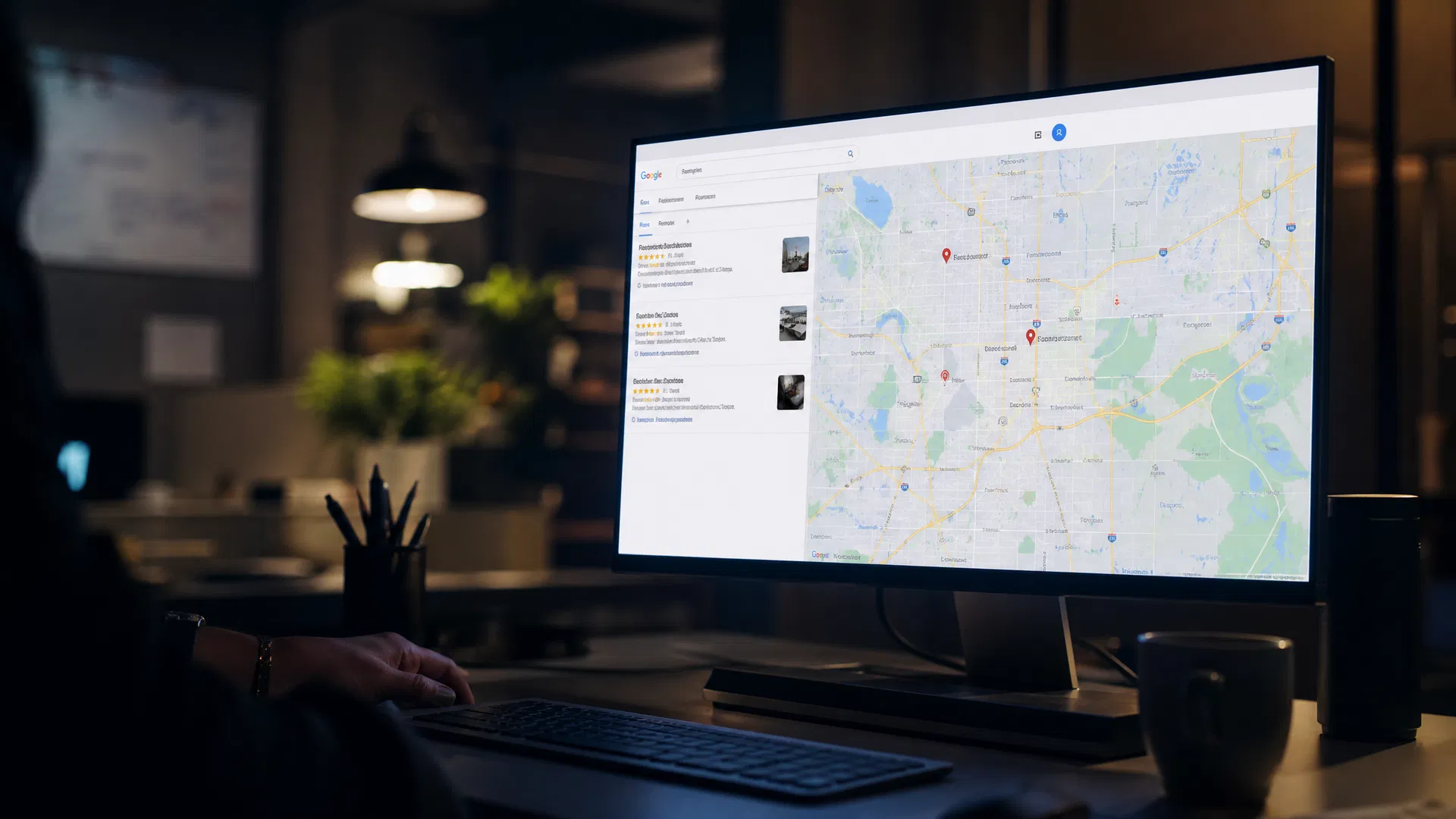
If you run a service business in Indian Trail and you're not showing up in the Google Maps 3-Pack, you're invisible to the customers who are ready to hire right now. Most local searches end with a call to one of the top three results. If that's not you, it's your competitor. The good news: ranking on Google Maps is not random. It's a system, and it can be worked.
What the Google Maps Algorithm Actually Looks At
Google's local ranking algorithm weighs three factors: relevance, distance, and prominence. Relevance is how well your profile matches what someone searched. Distance is how close your business is to the searcher. Prominence is how well-known and trusted your business appears based on reviews, links, and online mentions. Most Indian Trail businesses lose on relevance and prominence — not distance. Those are fixable.
Your Google Business Profile Is Probably Incomplete
An incomplete profile is the single most common reason local businesses don't rank. Google needs complete information to match your business to relevant searches. Check every section: business name, address, phone number, website, hours, service areas, business description, services list, and photos. If any of these are missing or outdated, you're leaving ranking signals on the table. A fully optimized Google Business Profile is the foundation of everything else. If you haven't done this yet, start with our Google Business Profile Setup service.
Reviews Are a Ranking Signal — Not Just Social Proof
The quantity, recency, and quality of your Google reviews directly affect where you rank. A business with 12 reviews from three years ago will consistently lose to a competitor with 40 recent reviews. You need a repeatable system for asking every satisfied customer to leave a review. A simple follow-up text or email after a job is completed is enough. Don't wait for customers to do it on their own — they won't. Our Google Business Profile Management service includes review generation as a core component.
NAP Consistency Across the Web
NAP stands for Name, Address, and Phone Number. Google cross-references your GBP information against dozens of other directories — Yelp, Angi, BBB, Apple Maps, and more. If your business name is listed differently across these platforms, or your old address is still showing up somewhere, it creates conflicting signals that suppress your ranking. Audit your listings and make sure every mention of your business online matches your GBP exactly.
Your Website Is Part of the Equation
Your Google Business Profile doesn't exist in a vacuum. Google looks at the website linked to your profile to gather more context about your business. If your website is slow, not mobile-friendly, or lacks clear information about the services you provide in Indian Trail, it will drag down your Maps ranking. Your website needs to clearly state who you are, what you do, and where you do it. A strong Local SEO Strategy integrates your website and your GBP so they work together to dominate search results.
Ranking on Google Maps isn't about tricking the algorithm — it's about consistently providing Google with the signals it needs to trust your business. By completing your profile, managing your reviews, and ensuring consistency across the web, you can start capturing the local leads you deserve.
Related Service Areas