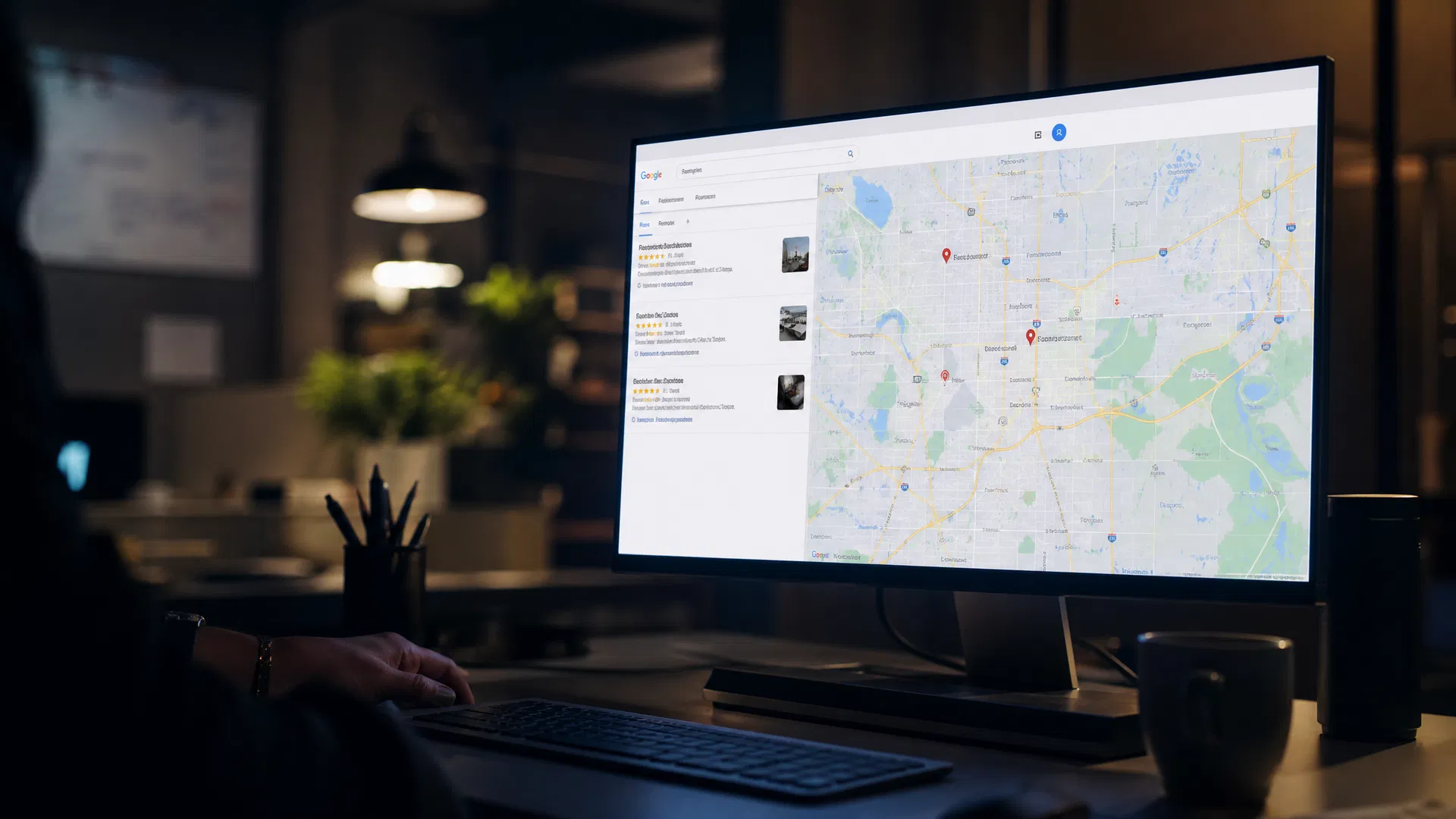
An Indian Trail contractor can have a complete Google Business Profile, good project photos, and years of experience—and still make it difficult for Google or a potential customer to understand which jobs the business actually wants.
The problem is often the website. A navigation item labeled Services may lead to one page that lists roofing, repairs, inspections, siding, gutters, and emergency work in a few short paragraphs. That tells a visitor the company does “a lot,” but it does not explain the scope, the difference between services, or what the customer should do next.
A useful service page has to do more than mention a keyword. It should clarify the job, establish whether the contractor is a reasonable fit, and make the next step obvious. The goal is not to manufacture a ranking signal. The goal is to publish a page that accurately represents the real service and helps a qualified customer make a decision.
A Complete Google Business Profile Cannot Fix a Vague Website
Your Google Business Profile and website should describe the same real business, but they perform different jobs.
The profile gives Google and searchers a concise summary: business category, services, location or service area, hours, reviews, photos, and contact options. The website has room to explain what each service includes, who it is for, where it is available, and what evidence supports the company’s experience.
If the profile lists roof repair, storm damage inspection, and roof replacement, but the website only says “residential roofing,” the website does not add much clarity. The same problem applies to HVAC, plumbing, electrical, landscaping, restoration, remodeling, and other service businesses. This is why a precise Google Business Profile services list should connect to equally precise website content. The profile names the service. The page explains it.
Give Each Revenue-Producing Service a Clear Home
Not every service needs a separate page. Splitting minor variations into thin pages can make the site harder to maintain and less useful. A separate page is justified when the service has its own customer problem, scope, evidence, questions, and next step.
For example, an electrical contractor might keep closely related troubleshooting tasks together, while creating a distinct page for panel replacement because the decision, scope, permitting questions, and project evidence are materially different. A remodeler might separate kitchen renovations from commercial tenant improvements because the buyer, process, and qualification criteria are different.
Before creating a page, answer four questions:
- The customer recognizes it as a distinct service or decision.
- The page can explain a real scope instead of repeating a broad description.
- Permissioned evidence, credentials, or process details can support the page.
- Is there a clear action for a qualified visitor to take?
If the answer is no, improve the parent service page instead of creating another URL.
Use Indian Trail Context Without Creating a Doorway Page
Adding “Indian Trail” to a heading does not make a page locally useful. A location reference should help the customer understand service availability or the way the work is delivered.
A contractor serving Indian Trail and surrounding Union County communities can explain the actual dispatch area, whether on-site estimates are available, the kinds of properties or facilities the service is designed for, and any real scheduling or access considerations. These details should come from the business—not from generic city facts copied into every location page.
Google’s people-first content guidance asks whether a page provides substantial value and leaves the reader feeling that they learned enough to achieve their goal. It also warns against publishing content mainly to capture search traffic. A city-specific service page should therefore exist because the local information improves the service decision, not because the city name can be inserted into a template.
Google Search Central: Creating helpful, reliable, people-first content
Show Evidence Without Inventing Outcomes
A service page is stronger when it shows how the company works. That does not require a ranking guarantee, an unsupported performance claim, or a made-up testimonial. Useful evidence can include:
- Original project photos the business has permission to publish.
- A short explanation of the problem, approved scope, and exclusions.
- Relevant licenses, certifications, warranties, or manufacturer relationships stated accurately.
- The steps a customer should expect before, during, and after the work.
- Clear limits, such as service boundaries, scheduling constraints, or jobs the company does not accept.
Specificity builds trust because it helps the reader decide whether the business fits the job. If evidence is not available, explain the process honestly rather than filling the space with claims such as “best,” “leading,” or “guaranteed.”
Make the Mobile Decision Path Obvious
Many contractor searches happen when the customer has an immediate problem. The service page should not force that visitor to hunt for contact information or interpret several competing offers.
On a phone, the page should make the service name, service area, phone number, request option, and response expectations easy to find. The primary call to action should match the service. A general strategy call may fit an agency website, while an estimate request, inspection request, or emergency call may fit a contractor.
The form should collect only the information needed for the next step. Long forms can be useful for complex qualification, but they should not be used by default. The correct amount of friction depends on the service and the business’s intake process.
Keep the Profile and Website Language Aligned
The website does not need to repeat the Google Business Profile word for word. It should, however, describe the same real services with consistent terminology.
If the profile names a service that the website never explains, add useful supporting content or reconsider whether that service belongs in the profile. If the website promotes a high-value service that is missing from the profile, review the profile’s service entries and categories for accuracy. Do not add categories or services merely to target keywords; they should reflect the work the business actually performs.
This alignment supports relevance and reduces confusion for customers moving from Google Maps to the site.
Measure the Page by Qualified Actions, Not Publication
Publishing the page is not the outcome. Measurement should answer whether Google is discovering it, whether the right searches are producing impressions, and whether qualified visitors take the intended next step.
Useful measures include Search Console impressions and query context, profile-to-website visits where available, tracked phone inquiries, forms, and the quality of the resulting conversations. A page can earn impressions before it earns clicks, and it can earn clicks without producing qualified inquiries. Those are different problems and should not be treated as one metric.
Avoid making large changes after a few impressions. Review a meaningful finalized period, inspect the actual query and page data, and improve the page only when the evidence points to a specific issue.
A Ten-Minute Contractor Service-Page Audit
Open one of your most important service pages and check the following:
- Is the service named specifically and explained in plain language?
- Does the page describe what is included, what may vary, and what requires an assessment?
- Does the local context explain real availability instead of repeating generic city facts?
- Does the page show permissioned photos, process details, credentials, or representative scope?
- Is one primary action obvious on mobile, with visible contact information?
- Can performance be measured with search visibility plus qualified calls, forms, or booked assessments where tracking exists?
If the page cannot answer most of these questions, adding more city keywords is not the fix. The page needs clearer service information.
An effective Indian Trail contractor website does not need dozens of thin pages. It needs maintained pages that accurately explain the work, reflect the service area, show credible evidence, and move the right visitor toward a clear next step.
Start with the services that matter most to the business. Make each page useful enough to stand on its own. Then align the website, Google Business Profile, and measurement plan around the same real offer.
Related Service Areas