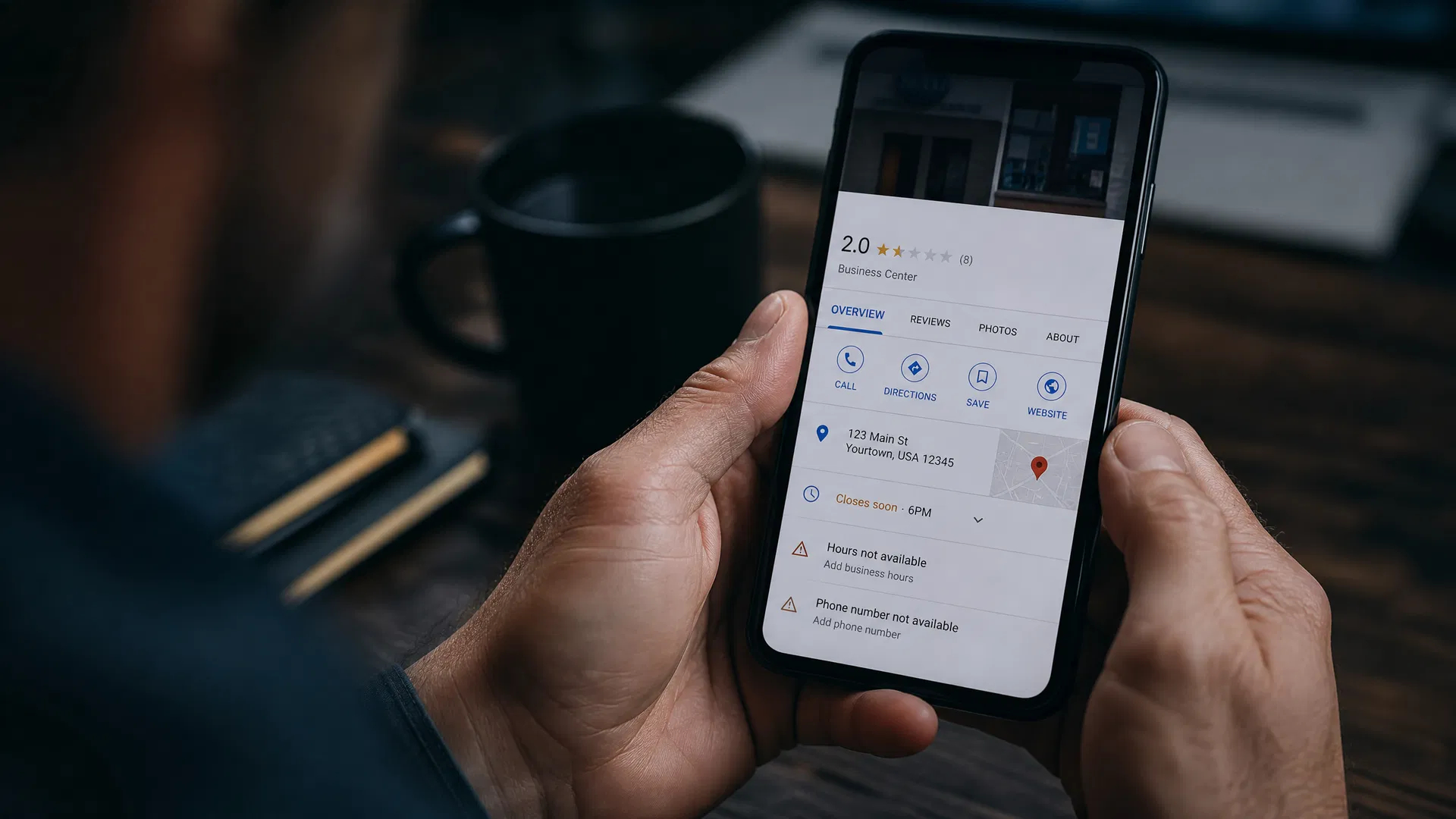
If you've ever wondered why one business ranks in the Google Maps 3-Pack while a seemingly similar business doesn't, the answer lies in three core ranking factors that Google has publicly acknowledged: relevance, distance, and prominence. Understanding what each factor means — and more importantly, what you can do about it — is the foundation of any effective local SEO strategy.
Google Maps Ranking Factor One: Business Relevance
Relevance measures how well your Google Business Profile matches what a searcher is looking for. Google wants to show the most relevant result for every search query. The more clearly your GBP communicates what you do, the more likely Google is to show you for related searches.
- Choose the most specific and accurate primary category for your business
- Add all relevant secondary categories for additional services
- Write a keyword-rich business description that clearly explains what you do and who you serve
- List all of your services in the Services section of your GBP
- Use relevant keywords naturally in your Google Posts and review responses
Google Maps Ranking Factor Two: Searcher Distance
Distance measures how far your business is from the searcher (or from the location specified in the search). This is the factor you have the least control over — you can't move your business. However, you can influence distance-related rankings by accurately setting your service area in your GBP, creating location-specific content on your website, and building citations that confirm your service area. For businesses that serve customers at their location (like a contractor or HVAC company), setting a precise service area is critical.
Factor 3: Prominence
Prominence is the most complex of the three factors. It measures how well-known and trusted your business is, both online and offline. Google considers the quantity and quality of your reviews, the number and consistency of your citations across the web, the authority of your website, and how often your business is mentioned online. Prominence is built over time, but there are specific actions you can take to accelerate it.
- Build a consistent stream of Google reviews from real customers
- Respond to every review to demonstrate engagement
- Ensure your NAP is consistent across all online directories
- Earn backlinks from reputable local websites
- Maintain an active, regularly updated GBP with fresh posts and photos
What Doesn't Move the Needle (Common Myths)
There are several popular beliefs about Google Maps rankings that simply aren't supported by evidence. Keyword stuffing your business name doesn't work and violates Google's guidelines. Buying fake reviews is against Google's terms of service and can result in your listing being suspended. Paying for Google Ads doesn't directly improve your organic Maps ranking. Focus on the fundamentals — relevance, distance, and prominence — and you'll see sustainable results.
Google Maps rankings are not random. They're the result of a systematic evaluation of your relevance, proximity, and prominence. The businesses that rank consistently are those that invest in all three areas over time. If you're a service business in Indian Trail or Union County NC looking to improve your Google Maps ranking, the strategies outlined here are your starting point.
Related Service Areas